Adaptive Design and Assembly of Polymer-based NanoplaTforms for Smart Gene and Drug Delivery
Recent breakthroughs in gene therapy have cleared the way for a larger second wave of medicines and established the groundwork for next-generation technologies. An effective gene delivery system is essential for gene therapy to be successful. As some of the most adaptable building blocks in soft nanotechnology, natural and synthetic macromolecules are the main focus in the development of delivery vectors with specialized compositions and functions. In this project, we propose a novel computational approach to smart tune polymers and/or nanocomposite architectures as efficient building blocks for polymer-based nanoplatforms (PBNs). We will (i) create delivery vectors depending on the gene or drug that needs to be delivered while reducing the socio-economic burden of various diseases. We will also (ii) develop a novel protocol to find drug-excipient combinations that produce stable, self-assembled polymer-based nanoplatforms as smart delivery vectors. These will represent the scaffold that is needed to shift from the traditional drug/gene delivery to personalized medicine. Cutting-edge developments in artificial intelligence and state-of-the art modeling approaches will be all combined in the adaptive design of the polymer-based nanoplatforms in a synergistic fashion and show how computational modeling can lead to the discovery of novel delivery vectors with technological applications.
Methodology
Our approach combines computational modeling with experimental validation to design polymer-based nanoplatforms specifically tailored for gene and drug delivery applications. We employ adaptive design algorithms to optimize nanocomposite architectures, considering molecular interactions and encapsulation efficiency. Multi-stage protocols are developed to engineer stable, self-assembled nanoplatforms that can efficiently deliver therapeutic agents while minimizing off-target effects. The proposed vectors are validated in silico through molecular dynamics simulations and binding affinity predictions to ensure specificity and efficacy for targeted gene and drug delivery. This integrated computational-experimental framework enables the rational design of next-generation delivery systems with enhanced bioavailability and therapeutic potential.
Nanocomposite Architectures
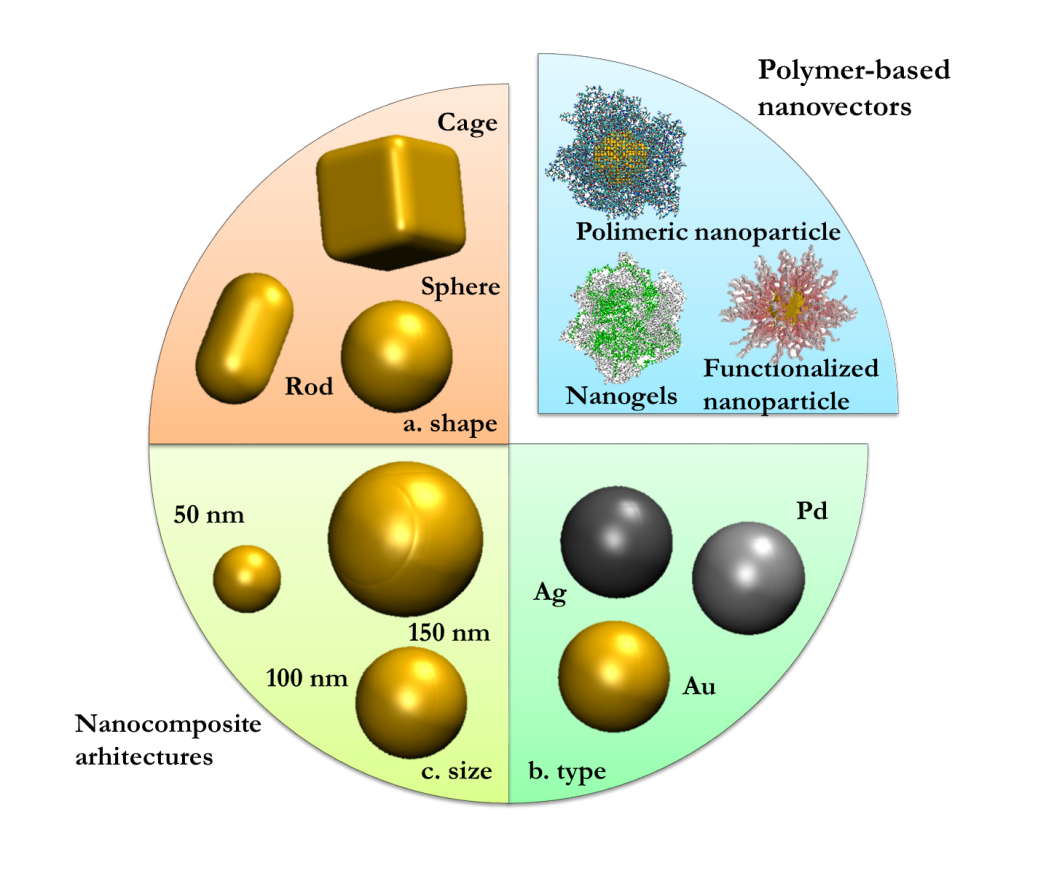
Schematic illustration of nanocomposite architectures serving as versatile building blocks for polymer-based nanoplatforms. These nanovectors can be tailored with diverse molecular architectures to achieve various sizes (10–1000 nm), shapes (e.g., sphere, cylinder, rod, polygon), types (e.g., Gold, Silver, Palladium), and structures (e.g., core-shell, capsule, hydrogel), enabling customizable functionalities for biomedical and nanotechnological applications.
Smart Delivery Vectors
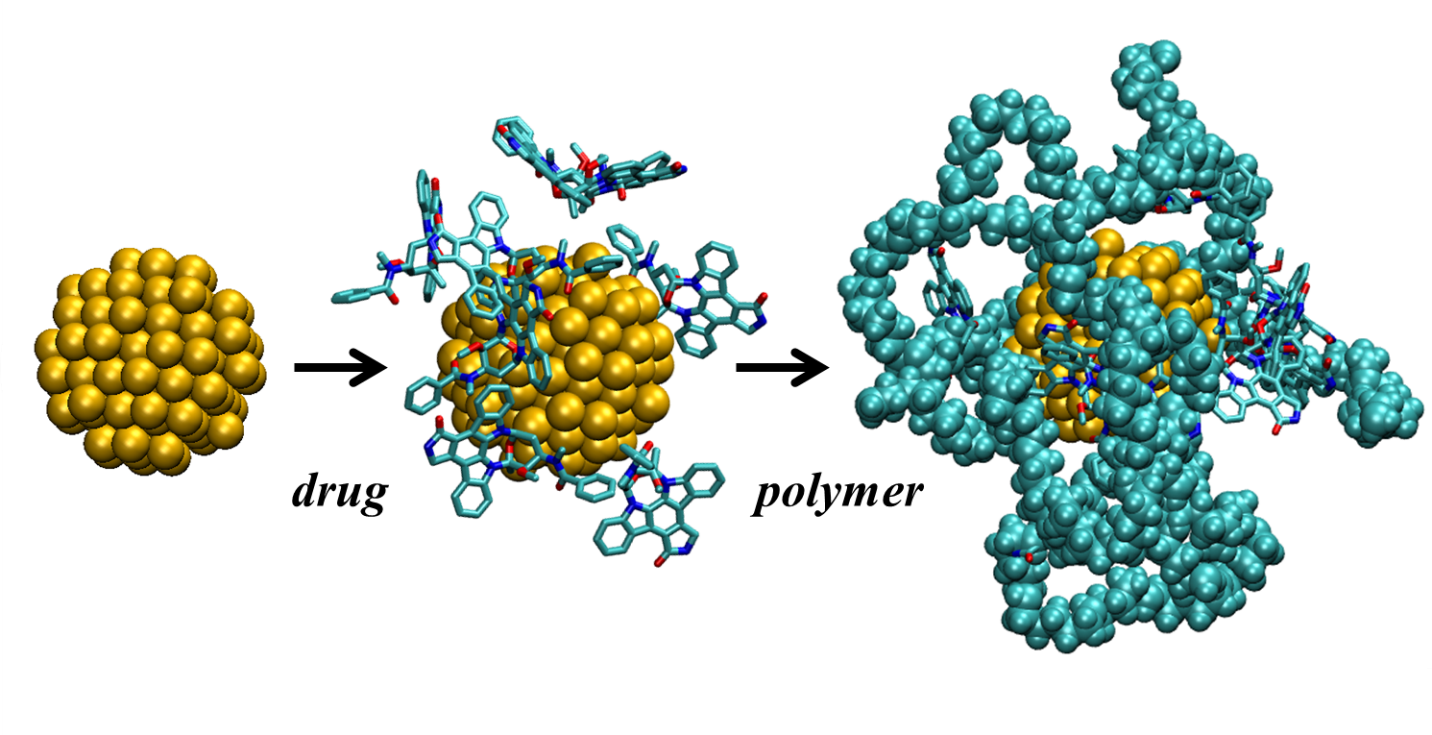
Schematic illustration of drug encapsulation into polymer-based nanoplatforms functioning as smart delivery vectors.
Publication list
Light Microscopy Image Segmentation Using Active Contours Driven by Local Image Information for Environmentally Friendly Fired-clay Bricks Design and Characterization
Aurel Baloi, Mihaela Streza, Bogdan Belean
• Article
• Plos ONE
• Oct 2025
• Q2
• doi:https://doi.org/10.1371/journal.pone.0328270
This study proposes an innovative approach for the recycling of dry wastewater sludge in the production of fired clay bricks, aiming to create environmentally …
Project Information

Project financed by UEFISCDI
Project Type: Subprogramme 1.1 – Human Resources, Research projects for stimulating young independent teams
Project Code: PN-IV-P2-2.1-TE-2023-0300
Contract No.: 61TE
Project Duration: 08.01.2025 – 31.12.2026
Principal Investigator:
Dr. Alexandra FARCAS
INCDTIM – National Institute for Research and Development of Isotopic and Molecular Technologies
Isotopic and Molecular Technologies Department
67-103 Donat St., Box 700, RO-400293 Cluj-Napoca, Romania
e-mail: alexandra.farcas@itim-cj.ro
phone: (+40)264-584037, ext. 177
Funding & Partners


The Executive Agency for Higher Education, Research and Innovation Funding